Letting Go with a Laugh: A Review of The Let Them Theory by Mel Robbins

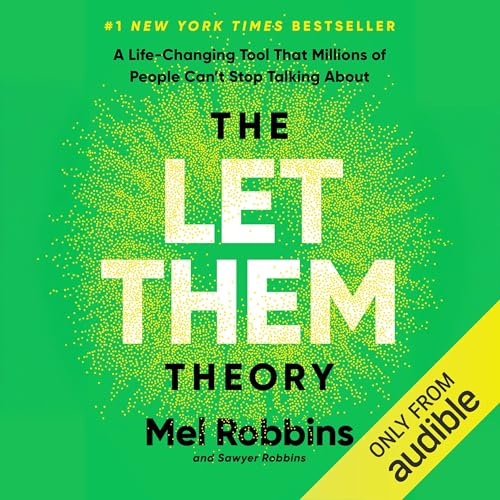
By: Mel Robbins
Length: 10 hrs and 38 mins
Alright, folks, buckle up—because Mel Robbins is back with a book that’s got everyone buzzing like a beehive at a barbecue. The Let Them Theory: A Life-Changing Tool That Millions of People Can’t Stop Talking About isn’t just a self-help book—it’s a wake-up call with a side of sass, co-authored with her daughter Sawyer Robbins.
If you’ve ever found yourself trying to play puppet master in someone else’s life (and failing miserably), this one’s for you. With her signature blend of tough love, science, and “I’ve-been-there” stories, Mel delivers a game-changer that’s equal parts hilarious and profound. Spoiler alert: it’s all about letting go of control and finding your chill. Let’s dive into this Let Them Theory summary and see why millions are obsessed.
Amazing!【Free now! Click me to listen this book freely on Amazon!】
Want to read it anytime, everywhere, I suggest you 🛒buy a hardcover,
The Gist: What’s The Let Them Theory All About?
Picture this: your buddy flakes on plans again, your kid ignores your sage advice, or your coworker steals your thunder at the meeting. Normally, you’d stew, scheme, or maybe even scream into a pillow. Enter The Let Them Theory. Mel Robbins Let Them Theory is built on two little words that pack a punch: “Let Them.” It’s not about throwing in the towel or becoming a human doormat—it’s about emotional detachment with swagger. The Let Them Theory explained is simple: stop trying to wrangle everyone into your version of perfect, and let them do their thing. Your sister’s dating a loser? Let her. Your boss is a jerk? Let them. Then, take that energy and focus on what you can control—your own happiness.
Mel’s not just blowing smoke here. She’s got the goods—psychology, neuroscience, even a nod to the Stoics—to back up why this works. But don’t worry, it’s not a dry lecture. She peppers it with tales from her own life, like the time she nearly lost it over her son’s taco stand meltdown or tried to micromanage her husband’s feelings. It’s relatable, it’s real, and it’s laugh-out-loud funny. By the end, you’re nodding along like, “Yeah, I do need to chill.”
 Mel Robbins serves up The Let Them Theory with a grin and a ‘you got this’ vibe.
The Nuts and Bolts: Let Them Theory Principles
The Let Them Theory principles boil down to a two-step dance: “Let Them” and “Let Me.” Step one—letting others be themselves—means accepting that you’re not the director of everyone’s life movie. Your mom’s nagging? Let her. Your friend’s ghosting? Let them. It’s about freedom from control, not because you’re weak, but because you’re smart enough to know you can’t rewrite their script. Step two—“Let Me”—is where personal empowerment kicks in. Once you stop playing fixer, you get to decide what’s next for you. Set relationship boundaries? Ditch toxic relationships? Chase your own dreams? That’s the sweet spot.
Mel breaks it into bite-sized chunks, applying it to everything from family feuds to workplace woes. Take her story about getting sidelined by her friend group. Instead of plotting a comeback or crying into her wine, she said, “Let them,” and built new connections. It’s like she handed herself a get-out-of-drama-free card—and now she’s passing it to us. The result? A playbook for how to let go that’s as practical as a Swiss Army knife.
Why We Cling—and Why We Shouldn’t
Let’s be honest: letting go of control is harder than getting a cat into a bathtub. We’re hardwired to meddle—especially us Americans, with our “can-do” attitude on steroids. Mel gets it. She confesses to being the queen of overreach—hovering over her kids, nudging her spouse, begging friends to see her side. But here’s the rub: it’s a losing battle. The Let Them Theory argues that clinging to control just leaves you frazzled and ticked off. Letting go? That’s emotional freedom, baby.
Take dealing with difficult people—like that coworker who thinks “teamwork” means “watch me shine.” Mel’s advice? Let them strut their stuff, and save your sanity. It’s not apathy; it’s strategy. Science backs her up—studies show that releasing what we can’t change slashes stress like a Black Friday discount. And in a country where we’re juggling jobs, kids, and Netflix binges, who doesn’t want that?
Amazing!【Free now! Click me to listen this book freely on Amazon!】
Want to read it anytime, everywhere, I suggest you 🛒buy a hardcover,
Relationships: Where the Rubber Meets the Road
If there’s one area where The Let Them Theory shines, it’s relationships. Toxic relationships driving you nuts? Let them reveal their true colors, then decide if they’re worth your Wi-Fi password. Partner not stepping up? Let them, and figure out what you need. Mel’s big on relationship boundaries—knowing where your lane ends and theirs begins. It’s not about ghosting everyone (though she’s cool with that if it fits); it’s about detaching from outcomes and letting others be themselves.
She dishes a gem about her husband, Chris, who wasn’t jazzed about her career pivot. Instead of staging a marital showdown, she let him grumble and kept her eyes on the prize. Guess what? He came around. It’s a masterclass in managing expectations—stop arm-wrestling people into your corner, and watch the magic unfold. Or, you know, walk away if it’s a dumpster fire. Your call.
 The Let Them Theory: When you stop pulling, you start winning.
Expectations: The Silent Joy-Killer
Americans love a good plan—until it flops. The Let Them Theory tackles our expectation obsession head-on. We’ve all been there: hoping your teenager cleans their room (ha!), or your pal remembers your birthday (oops). Mel says, “Let them disappoint you.” It’s not defeat—it’s liberation. If your sibling skips Thanksgiving, let them. If your boss skips your praise, let them. Then, pivot to what you can do—cook a killer turkey for yourself or nail that next project.
This emotional detachment isn’t cold—it’s clever. Mel calls it “guarding your peace,” and it’s a vibe. Imagine not losing your cool over your neighbor’s loud mower or your ex’s latest stunt. That’s the Mel Robbins advice we didn’t know we needed—until now.
Amazing!【Free now! Click me to listen this book freely on Amazon!】
Want to read it anytime, everywhere, I suggest you 🛒buy a hardcover,
Empowerment: The “Let Me” Payoff
Here’s where The Let Them Theory gets juicy: it’s not just about letting go—it’s about stepping up. Once you quit playing puppet master, you’re free to focus on you. That’s self-reliance with a capital “S.” Want to launch a side hustle? Let them scoff, and let you hustle. Fed up with a dead-end gig? Let them coast, and let you soar. It’s personal empowerment that hits like a double espresso.
Mel ties it to brain science—letting go aligns with our natural flow, says psychologist Dr. Amy Johnson, who she quotes. It’s less “fight the current,” more “float and sip a margarita.” For a nation of go-getters, this is catnip—freedom to chase your own stars without dragging everyone along.
How to Work It: Mel’s Playbook
So, how do you pull off this how to let go trick? Mel’s got a playbook. Start small: next time your barista messes up your latte, mentally say, “Let them,” and sip anyway. Feel that zen? Build on it. For bigger stuff—like a blowout with your BFF—observe, don’t explode. See what they do, decide what you need, and act. It’s Mel Robbins advice at its finest: simple, doable, and laced with humor. “The fastest way to lose your cool,” she quips, “is to chase someone else’s.”
Amazing!【Free now! Click me to listen this book freely on Amazon!】
Want to read it anytime, everywhere, I suggest you 🛒buy a hardcover,
She keeps it light, too—laughing at her own flops (like policing her kids’ screen time) while dropping truth like confetti. It’s why this book feels like a chat with your funniest, smartest friend.
 The Let Them Theory: Ditch the baggage, keep the glow.
Why Americans Are Eating This Up
The Let Them Theory lands like a perfectly thrown football in the U.S. because it gets us. We’re control freaks who secretly crave a breather. Mel’s mix of grit, wit, and “you do you” vibes fits our love of independence—and our burnout from overdoing it. With 63 million views on one Instagram reel, it’s clear she’s tapped a nerve. Readers on Goodreads rave it’s “life-altering” and “a guilt-free reset.”
Sure, some grumble it’s Stoicism with lipstick, but Mel’s modern twist—think research meets real talk—makes it pop. Her honesty seals the deal. She’s not preachy; she’s flawed and owns it—like when she admits to nagging her family into eye-roll territory. That’s the acceptance of others we need to hear: they’re messy, we’re messy, let’s all just live. The Verdict: Should You Read It?
Amazing!【Free now! Click me to listen this book freely on Amazon!】
Want to read it anytime, everywhere, I suggest you 🛒buy a hardcover,
In a word: heck yes. The Let Them Theory: A Life-Changing Tool That Millions of People Can’t Stop Talking About is a must for anyone who’s ever felt tangled in other people’s nonsense. It’s a funny, fierce guide to emotional freedom, relationship clarity, and self-reliance that doesn’t pull punches. Mel Robbins has handed us a golden ticket: let them do them, and let you do you. Grab it, laugh through it, and watch your stress melt like ice cream in July. This isn’t just a book—it’s a movement. And trust me, you’ll want in.
Voice
I love this book so much! This book focuses on what I call the new liberation model versus the old model that was conditioned and programed into us that we currently find ourselves currently mirrored in with components of power, control, stress, fear, elitist, immaturity, righteousness (need to be right), polarization, tribalism, narcissism, stubborn, rigid and/or chaos, negativity bias, over-thinking, complaining, know-it-all, judgmental, critical/hyper-critical, egotistical (ego) (selfish/group selfishness), contradictory, superiority, hypocritical, comparison, competitiveness, fighting & arguing, fragmented society, entitlement, perfectionism, identifying/over-identifying with your thoughts, feelings and beliefs (thoughts, feelings, beliefs and opinions are not facts) mechanical society, ideological, misery, victim mentality, we are right and your group is wrong/we are good and your group is bad, drama triangle & drama addiction, neuroticism, codependency, terrible at relationships (especially with people who think or believe differently than you and with people who can think outside of the current box/boxes), moral superiority, increased mental health issues & increased medical health issues and lots of news addiction & social media addiction and political addiction/political righteousness /political radicalise too.
Thank you to those (like Mel Robbins) that are doing deeper mental health therapy work on themselves to be better human beings, transform themselves, and to be better version of themselves. Mel is a great example of a genuine, vulnerable, real, whole and authentic role model and a real leader in our society!
Thank you to those humans, researchers and mental health/medical professionals/other professionals advocating for the newer integration and liberation models. Separation models never work long term, are very immature and go against the laws of nature.
The other books that are like this are: "Liberated Love", "Unhealthy Helping", "Beyond Anxiety" and "Dissolving the Ego", "The Way of Integrity", "On Fear", "Living Untethered" and "No Bad Parts".
Remember, the younger generation is watching and witnessing all of this toxic & dysfunctional mess. Hopefully, the younger generation will learn from this and not be anything like the older generations.
Please do us all a big favor and go work on yourselves with mental health therapy work. Working on yourself is the only true, real, authentic way to transform a society. Anything less, is just superficial, shallow, and surface level change. Please look at my first paragraph and I think most humans will see many items in that first paragraph to work on in therapy.
Most of the human traits in my first paragraph are terrible for your relationships and connections in general.
Amazing!【Free now! Click me to listen this book freely on Amazon!】
Want to read it anytime, everywhere, I suggest you 🛒buy a hardcover,
Conclusion
It is interesting that the USA Western culture teaches and trains people to be in your own ego and (the ego is the highest priority) The USA mantra is "Your own ego and what your ego or what the group ego wants is all that matters" and "I have all the answers"(ego) where the Eastern culture has their highest attainment is enlightenment and self actualization, and they teach their culture that: "We do not have all the answers" (humble). The Eastern mantra is "Drop your own ego, practice non attachment and work towards self actualization and enlightenment". I wonder what culture is doing better right now?
You could also try a meditation class or a yoga class (or do one on YouTube) to see if you can calm down your brain, body, mind, and your ego! It might also improve your relationships if you are in a calmer, flexible and more loving state of mind. Plus, you might gain more creative, innovative, and ingenuity problem-solving skills.
Order your copy of The Let Them Theory now and discover how much power you truly have. It all begins with two simple words.
Amazing!【Free now! Click me to listen this book freely on Amazon!】
Want to read it anytime, everywhere, I suggest you 🛒buy a hardcover
Let Them Theory's key principles
- Letting go of control: The theory recognizes that attempting to control other people's behavior is futile and often counterproductive. It encourages individuals to detach themselves from the outcomes of others' choices and focus on their own actions and responses.
- Focusing on self: By releasing the need to control, individuals can redirect their energy towards their own goals, aspirations, and personal development. This self-focus promotes self-reliance and personal empowerment.
- Acceptance of others: The Let Them Theory advocates for accepting people as they are, flaws and all. It acknowledges that everyone has their own unique perspective and experiences, and trying to force them to conform to our expectations is not only futile but also disrespectful.
- Setting boundaries: The theory encourages individuals to establish clear boundaries in their relationships. This means communicating one's needs and expectations while respecting the boundaries of others.
- Managing expectations: The Let Them Theory emphasizes the importance of managing expectations in relationships. By setting realistic expectations and avoiding unrealistic assumptions, individuals can avoid disappointment and resentment.
- Dealing with difficult people: The theory provides a framework for dealing with difficult people in a calm and assertive manner. It encourages individuals to respond to challenging situations with empathy and understanding, while maintaining their own boundaries.
The Benefits of Embracing the Let Them Theory
Embracing the Let Them Theory can lead to numerous benefits, including:
- Reduced stress and anxiety: By relinquishing the need to control others, individuals can experience a significant reduction in stress and anxiety. This is because they are no longer burdened by the weight of others' expectations and behaviors.
- Improved relationships: The theory can lead to healthier and more fulfilling relationships. By accepting others for who they are and setting clear boundaries, individuals can build stronger connections based on mutual respect and understanding.
- Increased self-awareness: The Let Them Theory encourages individuals to focus on their own thoughts, feelings, and behaviors. This self-reflection can lead to increased self-awareness and personal growth.
- Enhanced emotional freedom: By detaching from the outcomes of others' choices, individuals can experience a greater sense of emotional freedom. This freedom allows them to pursue their own passions and goals without the fear of judgment or rejection.
The Let Them Theory in Action: A Practical Guide
The Let Them Theory is not just a theoretical concept; it can be applied to various aspects of life, including personal relationships, professional interactions, and social situations. Here are some practical tips for implementing the Let Them Theory:
- Practice mindfulness: Mindfulness can help individuals become more aware of their thoughts, feelings, and reactions. This awareness can enable them to identify and challenge negative thought patterns that contribute to the need to control others.
- Communicate assertively: Assertive communication involves expressing one's needs and boundaries in a clear and respectful manner. This can help prevent misunderstandings and conflicts in relationships.
- Focus on self-care: Prioritizing self-care activities, such as exercise, meditation, and spending time in nature, can help individuals maintain emotional balance and resilience.
- Practice gratitude: Cultivating a sense of gratitude can shift the focus from what is lacking in life to what is present. This can help individuals appreciate the positive aspects of their relationships and experiences.
- Seek support: If struggling to implement the Let Them Theory, seeking support from a therapist or counselor can be beneficial. A mental health professional can provide guidance and support in developing coping mechanisms and overcoming challenges.
Keywords
- The Let Them Theory
- Mel Robbins Let Them Theory
- Let Them Theory summary
- Let Them Theory explained
- Letting go of control
- Emotional detachment
- Relationship boundaries
- Personal empowerment
- Acceptance of others
- Managing expectations
- Dealing with difficult people
- Freedom from control
- Self-reliance
- Toxic relationships
- How to let go
- Emotional freedom
- Mel Robbins advice
- Let Them Theory principles
- Letting others be themselves
- Detaching from outcomes
Amazing!【Free now! Click me to listen this book freely on Amazon!】
Want to read it anytime, everywhere, I suggest you 🛒buy a hardcover